


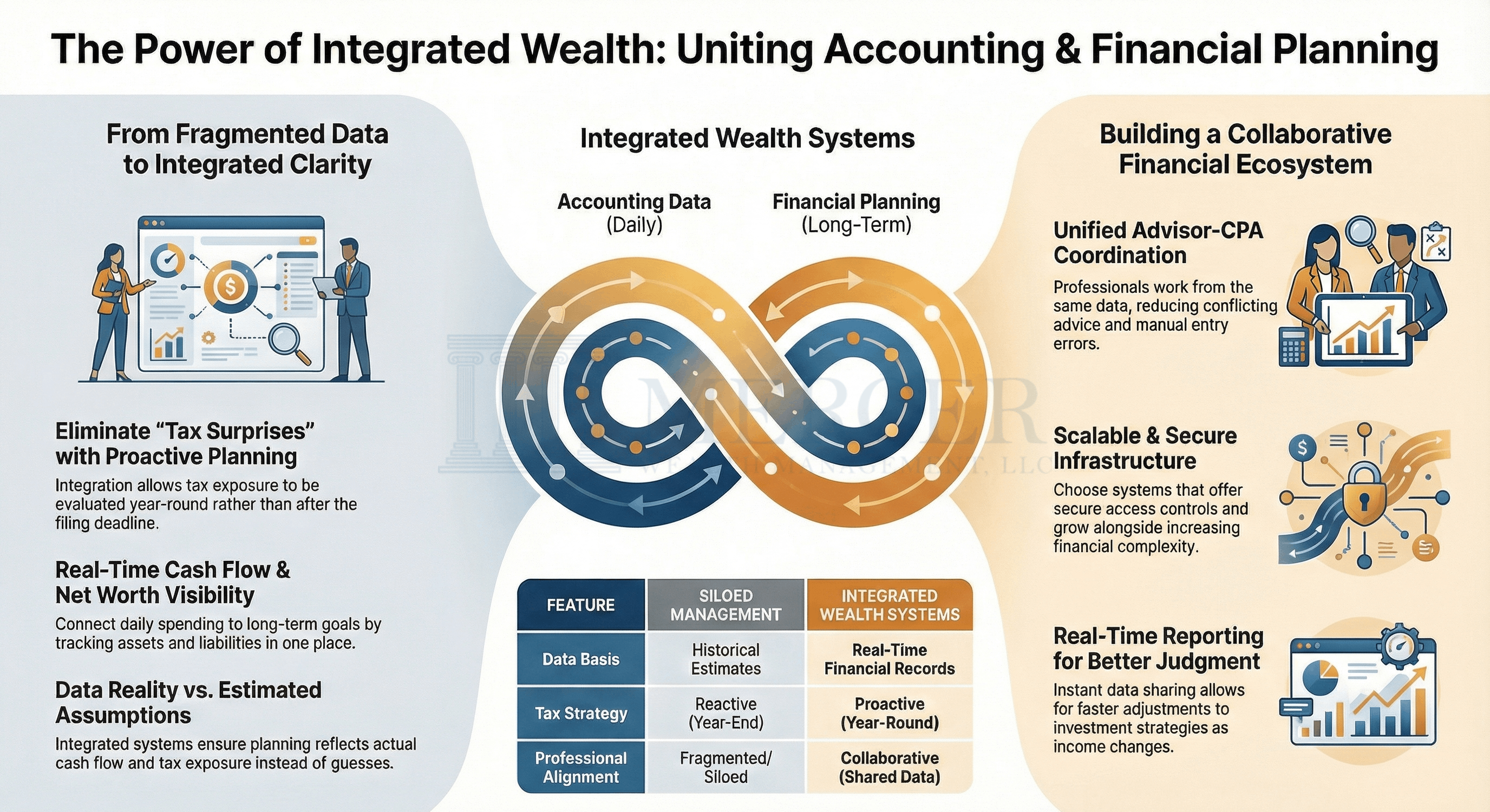
Managing wealth today involves more than tracking investments or filing taxes once a year. Investors, business owners, and families often deal with multiple accounts, income sources, and planning decisions that overlap throughout the year. When accounting data and wealth management systems operate separately, important details can be missed, leading to tax surprises, unclear cash flow, or misaligned planning decisions. The best accounting solutions integrating with wealth management systems help bring structure to this process. They connect day-to-day financial records with long-term planning, allowing decisions to be based on accurate, up-to-date information. This integration supports better judgment, clearer planning, and greater confidence in both short-term actions and long-term financial direction.
Why Accounting and Wealth Management Integration Matters
Accounting and wealth management integration matters because financial decisions rarely exist in isolation. Income, expenses, investments, and taxes influence each other throughout the year. Integrated financial planning allows advisors and clients to see the full picture rather than working from outdated or incomplete information. Accounting systems for wealth management help improve tax accuracy, clarify cash flow, and support consistent decision-making. Without integration, planning often relies on estimates, which can lead to missed opportunities or unexpected outcomes. When accounting and planning work together, investors gain a clearer understanding of how daily financial activity affects long-term goals. This alignment improves coordination, reduces confusion, and helps ensure that planning decisions reflect reality rather than assumptions.
What is Integrated Accounting and Wealth Management
Integrated accounting and wealth management does not mean replacing professional advice with software. Integrated wealth management systems connect accounting data with planning and investment tools so information flows consistently. Financial planning and accounting integration allows income, expenses, and tax data to inform investment and planning decisions in real time. This setup supports collaboration between advisors and CPAs rather than creating silos. Integration also sets realistic expectations by focusing on coordination, not automation alone. It helps ensure that financial plans reflect actual cash flow, liabilities, and tax exposure. Understanding this distinction prevents confusion and keeps the focus on better decision-making rather than technology for its own sake.
Key Benefits of Using Accounting Solutions That Integrate With Wealth Management
The benefits of integrated accounting systems extend beyond convenience. Accounting software for financial planning supports accuracy, consistency, and coordination across financial decisions. Integration reduces manual work and improves insight, allowing advisors and clients to focus on planning rather than reconciliation. These benefits become more important as finances grow more complex.
Key benefits include:
- Better tax awareness throughout the year
- Clearer visibility into cash flow and net worth
- Stronger coordination between advisors and CPAs
- Reduced risk of data errors or missing information
Together, these benefits support planning decisions that are grounded in accurate information and aligned with long-term objectives rather than reactive adjustments.
Improved Tax Planning and Forecasting
Improved tax planning and forecasting is one of the most valuable outcomes of integration. When accounting data feeds into planning systems, tax exposure can be evaluated throughout the year instead of after the fact. This allows for better timing of income, expenses, and investment decisions. Forecasting becomes more reliable because it is based on real data rather than estimates. Ongoing visibility supports proactive planning and reduces year-end surprises. Integrated systems help advisors and CPAs coordinate strategies, improving after-tax outcomes and supporting long-term financial stability.
Clearer Cash Flow and Net Worth Visibility
Clearer cash flow and net worth visibility helps investors understand how money moves through their lives. Integrated systems track income, expenses, assets, and liabilities in one place. This clarity supports better budgeting, planning, and decision-making. Investors can see how spending affects savings and how assets grow over time. Accurate visibility also improves confidence during planning discussions. When decisions are based on clear data, adjustments feel purposeful rather than reactive. This level of insight is especially valuable for families and business owners managing multiple financial priorities.
Better Coordination Between Advisors and CPAs
Better coordination between advisors and CPAs improves planning quality and reduces misunderstandings. Integrated systems allow both professionals to work from the same information, reducing duplication and errors. This coordination supports consistent advice across investments, taxes, and long-term planning. Clear communication helps ensure strategies align rather than conflict. When professionals collaborate effectively, clients benefit from smoother execution and clearer explanations. Strong coordination supports trust and helps clients feel confident that decisions are well-informed and aligned with their goals.
Fewer Errors and Manual Data Gaps
Fewer errors and manual data gaps improve reliability. Manual data entry increases the risk of mistakes, outdated information, and inconsistent reporting. Integration reduces these risks by keeping records aligned across systems. Accurate data supports better planning and reduces stress during reviews or tax preparation. Fewer gaps also mean less time spent reconciling information and more time focused on meaningful planning conversations. This efficiency supports better outcomes and a smoother client experience.
Core Features to Look for in Accounting Solutions for Wealth Management
When evaluating accounting software features for wealth management, the focus should be on usability, coordination, and reliability. Accounting tools for wealth advisors should support planning without adding unnecessary complexity. The right features help ensure systems grow alongside financial needs and remain secure.
Important features to consider include:
- Real-time data sharing and reporting
- Compatibility with planning and portfolio systems
- Secure access controls
- Ability to scale with financial complexity
These features support consistency and help maintain alignment across planning, accounting, and advisory relationships.
Real-Time Data Sharing and Reporting
Real-time data sharing and reporting allow decisions to reflect current information. This feature supports timely planning adjustments and clearer communication. Updated reporting improves confidence and reduces reliance on estimates. Real-time access also helps advisors respond quickly to changes in income or expenses, supporting better guidance.
Compatibility With Portfolio and Planning Tools
Compatibility with portfolio and planning tools ensures accounting data supports investment and retirement planning. Systems should work together smoothly, reducing duplication and confusion. Compatibility helps advisors evaluate strategies using complete information, improving planning accuracy and consistency.
Secure Access and Permissions
Secure access and permissions protect sensitive financial information. Proper controls ensure only authorized professionals and family members can view or edit data. Security supports trust and compliance, which are essential in integrated financial systems.
Scalability for Growing Financial Complexity
Scalability allows systems to grow with changing needs. As finances become more complex, accounting solutions should support additional accounts, entities, or reporting requirements. Scalable systems prevent disruption and support long-term planning consistency.
Best Accounting Solutions That Integrate With Wealth Management Systems
The best accounting software for wealth management varies by need and complexity. Accounting platforms for financial advisors are best evaluated by how well they support coordination rather than specific features alone. Education, not endorsement, is key when reviewing options.
Solutions Commonly Used by Individuals and Families
Individuals and families often use general-purpose accounting platforms to track income, expenses, and net worth. These tools support budgeting and organization and can integrate with planning systems for clearer insight. Simplicity and visibility are often priorities at this level.
Solutions Often Used by Business Owners and Professionals
Business owners and professionals typically require accounting systems that support multiple entities, income streams, and reporting needs. Integration helps align business finances with personal planning, supporting better tax and cash flow decisions.
Systems Commonly Used by Advisors and CPAs
Advisors and CPAs often rely on collaborative systems that support shared access and reporting. These platforms improve coordination and help ensure planning decisions are based on accurate, consistent information across professional teams.
Accounting Integration for Different Types of Clients
Accounting integration looks different depending on a client’s financial structure, income sources, and planning needs. Accounting solutions for high net worth individuals often focus on visibility and coordination, while accounting for business owners emphasizes structure and reporting. The goal across all client types is the same: ensure accurate information supports better decisions. Practical integration reflects real-life complexity rather than one-size solutions. When accounting systems align with wealth management, planning becomes clearer and more reliable. This approach helps advisors and clients understand how daily financial activity connects to long-term goals. Tailoring integration to client needs improves usefulness and avoids unnecessary systems or processes that add confusion rather than clarity.
Individuals and Families
For individuals and families, accounting integration focuses on clarity and organization. Tracking income, expenses, assets, and liabilities in one system helps support budgeting, planning, and long-term goal setting. Integrated systems allow wealth advisors to evaluate cash flow patterns and adjust strategies accordingly. Families benefit from clearer net worth tracking and better preparation for tax planning discussions. Integration also supports coordination around education funding, retirement planning, and estate considerations. By keeping financial records aligned with planning tools, individuals and families gain confidence that decisions are based on accurate, up-to-date information rather than estimates or assumptions.
Business Owners and Entrepreneurs
Business owners and entrepreneurs often face layered financial complexity. Accounting integration helps separate and coordinate business and personal finances. Systems that support multi-entity tracking and reporting allow for clearer cash flow analysis and tax planning. Integration improves visibility into income timing, reinvestment decisions, and liquidity needs. This clarity supports better planning around compensation, business growth, and eventual exit strategies. When accounting and wealth management align, business owners can make informed decisions without losing sight of personal financial goals. Integration reduces surprises and helps balance business priorities with long-term financial security.
Professionals With Complex Income Structures
Professionals with variable income, equity compensation, or multiple revenue sources benefit significantly from integration. Accounting systems help track income patterns, deductions, and obligations accurately. When integrated with wealth management, these systems support better tax forecasting and cash flow planning. This clarity helps manage uneven income and supports disciplined saving and investing. Professionals gain insight into how compensation structures affect long-term goals. Integration reduces uncertainty and supports consistent planning despite income variability. This approach helps professionals stay focused on long-term stability rather than reacting to short-term fluctuations.
The Role of Accounting Integration in Tax-Aware Wealth Planning
Tax planning and wealth management are closely connected. Accounting integration improves tax-efficient financial planning by ensuring decisions are based on accurate, current data. Integrated systems allow advisors and CPAs to evaluate tax impact throughout the year rather than after filing deadlines. This supports better timing of income, expenses, and investment decisions. Tax-aware planning reduces surprises and helps preserve wealth over time. When accounting data feeds into planning discussions, strategies become more realistic and coordinated. This alignment improves after-tax outcomes and supports long-term financial confidence.
Common Mistakes When Choosing Accounting Solutions for Wealth Management
Accounting integration mistakes often occur when systems are chosen without considering planning needs. Financial system integration challenges usually stem from focusing on features rather than coordination. One common mistake is selecting software that does not align with advisory or CPA workflows. Another is overcomplicating systems, leading to underuse. Ignoring data security or scalability can also create future problems. Successful integration requires clarity on goals, collaboration needs, and long-term use. Avoiding these mistakes helps ensure accounting systems support planning rather than create friction or confusion.
Common mistakes include:
- Choosing tools without advisor or CPA input
- Overlooking data security and access controls
- Using systems that do not integrate with planning tools
- Adding unnecessary complexity
How Wealth Management Firms Coordinate With Accounting Professionals
CPA and wealth advisor coordination is essential for effective planning. Collaborative financial planning ensures accounting data supports investment, tax, and retirement strategies. Wealth management firms often work closely with CPAs to align assumptions, timing, and reporting. This coordination reduces duplication and conflicting advice. Shared understanding improves communication and execution. When professionals collaborate effectively, clients benefit from consistent guidance and clearer explanations. Coordination also supports proactive planning rather than reactive adjustments. This approach strengthens trust and improves long-term outcomes without turning planning into a fragmented process.
How to Evaluate the Right Accounting Solution for Your Financial Plan
Choosing accounting software requires evaluating how well it supports planning needs rather than focusing on popularity. An effective accounting solution comparison considers complexity, reporting, and collaboration. The right choice improves clarity without adding unnecessary work. Evaluating options thoughtfully helps ensure systems remain useful as financial needs evolve. This process supports long-term consistency and reduces the risk of future changes or disruptions.
Based on Financial Complexity
Financial complexity influences system requirements. Simple structures may only need basic tracking, while complex situations require advanced reporting. Choosing a system that matches current and future complexity supports scalability and consistency.
Based on Tax and Reporting Needs
Tax and reporting needs vary by income structure and assets. Systems should support accurate reporting and coordination with tax planning. This alignment improves efficiency and reduces surprises.
Based on Advisor and CPA Collaboration
Collaboration is critical. Systems should allow advisors and CPAs to access relevant data securely. Strong collaboration supports better planning and clearer communication.
Using Accounting Integration to Support Better Financial Decisions
Accounting integration supports better financial decisions by connecting daily activity with long-term planning. When accounting and wealth management systems work together, clarity improves and uncertainty decreases. Integration helps ensure decisions are based on accurate information rather than assumptions. This alignment supports consistent planning, better tax awareness, and stronger coordination among professionals. Over time, integrated systems help investors, families, and business owners stay focused on goals with confidence and control.